
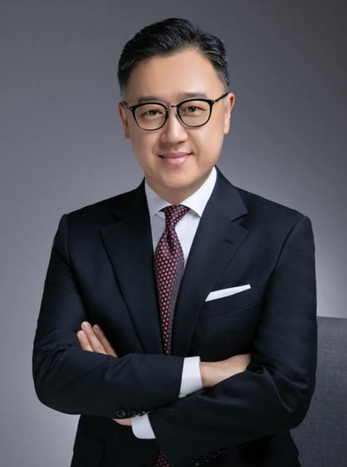
As global ESG investment scales surge towards the $50 trillion mark, the policy engine of the Chinese market is accelerating. During this year’s Two Sessions, the Government Work Report clearly stated the need to expedite the development of a green and low-carbon economy, improve the green financial standards system, and promote the deep integration of ESG with the real economy.In this green revolution, how should Hong Kong, as an international financial hub, position itself? For this purpose, the author has specially invited Mr. Joseph Mak, member of the Zhejiang Provincial Committee of the Chinese People’s Political Consultative Conference and Dean of the Asia-Pacific ESG Strategy Research Institute (APESG), to provide an in-depth analysis of regional development opportunities under ESG investment trends.

01
W: As of March 2025, China’s outstanding ESG bond scale has reached approximately 13.2 trillion yuan, with green bonds accounting for over 40% of this total, and issuance volume surging by 54% year-on-year. ESG public fund assets under management have exceeded 818.2 billion yuan, with environmental protection-themed funds constituting more than 22%, as investors seek green opportunities through diversified products. In light of the rapid growth of ESG investment in Mainland China, what are Hong Kong’s notable highlights and differences in the field of green finance?
Redefining the Market Landscape to Lower Capital Costs
M: Leveraging its unique positioning of “backed by the motherland and connected to the world,” Hong Kong fully utilizes its role as a “super-connector” to build dual advantages in ESG: “connecting international standards with local practical innovation.” In 2024, the total issuance of green and sustainable bonds in Hong Kong exceeded USD 84 billion, maintaining its top position in Asia for seven consecutive years and accounting for 45% of the region’s total. The number of SFC-authorized ESG funds surpassed 200, with assets under management reaching around HKD 1.2 trillion, representing a 136% increase in fund numbers and a 15% growth in assets compared to three years ago. This leadership stems from continuous financial innovation, with Hong Kong pioneering several novel ESG financial products and service models. Examples include the successful issuance of the world’s first multi-currency digital green bonds, valued at approximately HKD 6 billion; Galaxy International assisting the Dongyang State-owned Assets Company in issuing the world’s first green bond certified using a “drone + carbon satellite + AI” methodology to raise funds for low-carbon projects; and the completion in Hong Kong of Ant Digital Technologies’ first domestic RWA financing project for a new energy physical asset in mainland China—all landmark cases demonstrating Hong Kong’s leading edge in green finance.
APESG has also assisted some mainland enterprises with green investment and financing by introducing international capital. We plan to launch Green Real-World Asset (GRWA) tokenization products in Hong Kong to aid the internationalization of green assets. Looking forward, Hong Kong can leverage its financial market strengths to actively explore innovations in products such as green bonds, green funds, ESG ETFs, and GRWA to enhance its competitiveness.
W: Under the global wave of sustainable development, what impact does ESG have on the capital market?
M: ESG is reshaping the landscape of the capital market, driving green investment from a concept to the mainstream and becoming a key driver for the transformation and upgrading of the capital sector. MSCI research indicates that companies with superior ESG performance possess greater resilience and sustainable potential, delivering better stock returns than their peers and enjoying lower bond financing costs. Data from State Street Global Advisors shows that the institutional ownership percentage of leading ESG companies is 23% higher than that of laggards, creating a significant “sustainability premium.” Multiple sources suggest that companies with high ESG scores are more likely to receive higher credit ratings and lower spreads. For instance, the downgrade of an internet company’s ESG rating triggered large-scale divestment by European funds, involving over $1 billion, which clearly demonstrates the powerful guiding force of ESG in the capital market.
W: As a SPAC sponsor, I’ve observed that during the merger process with target companies, those with strong ESG attributes often receive higher valuation recognition. Some sovereign wealth funds and large institutional investors typically set up dedicated ESG investment quotas. Projects lacking these elements may miss out on such strategic investors, thereby limiting their financing channels and potential for valuation uplift. How should enterprises seize the development opportunities brought by ESG?
M: The quality of a company’s ESG disclosure and its ratings influence its capital accessibility. Enterprises need to establish a dynamic mechanism linking ESG strategy with financing goals, integrating carbon reduction and social responsibility into their business and capital planning. This creates a virtuous cycle of “ESG competitiveness → low-cost financing → green growth,” enabling them to gain a leading edge in the global capital restructuring.
02
In “Co-evolution” with Family Offices
W: According to statistics from Scorpio Partnership, 45% of Asian family offices have ESG investment decisions led by the new generation under the age of 35. By early 2025, the number of Single Family Offices (SFOs) in Hong Kong has exceeded 2,700, and the Multi-Family Office (MFO) market is also growing rapidly. As ESG shifts from concept to concrete investment action, what distinctive behavioral characteristics do these capital forces, led by the younger generation, exhibit? And how can Hong Kong leverage its advantages to transform this “new generation influence” into fresh market momentum driving ESG investment?
M: The new generation of investors is characterized by being “value-driven and impact-oriented.” Some family offices have integrated green technology and clean energy into their core allocations. By participating in innovative models like carbon trading and impact investing, they are promoting the deployment of sustainable capital and green solutions in countries along the Belt and Road, presenting significant opportunities for Hong Kong. They value Hong Kong’s unique combination of “global vision and China opportunities.” From participating in the Greater Bay Area carbon market to allocating green bond portfolios, and engaging in ESG fund and impact investing practices, family offices are leveraging Hong Kong’s legal system, information transparency, and product innovation capabilities to build an intergenerational sustainable asset allocation framework. Policy support from the Hong Kong SAR Government, such as tax incentives and asset allocation flexibility, further enhances its attractiveness as an ESG capital hub.
W: Regarding carbon trading, in a conversation with Mr. Wang Shi, founder of Vanke, at the end of last year, he mentioned that the annual trading scale of China’s domestic carbon market is around RMB 10 billion, which is relatively policy-guided. This stands in stark contrast to the EU carbon market, where annual trading volume has already exceeded RMB 5 trillion. Therefore, he also suggested that while I focus on developing SPACs, I could further explore the carbon sink trading market, which holds great promise for the future.
03
“Super Connector” as a Key Entry Point
W: Among the existing ten carbon trading markets in the Asia-Pacific region, Hong Kong possesses unique advantages. It not only supports dual-counter trading but also has a complete industrial chain ecosystem, coupled with its distinct status as an international financial center, giving it every condition to lead the region in this field. Based on this, the relevant SPAC projects I launch in the future will also seek merger opportunities in the carbon sink trading sector as circumstances allow. In fact, from a broader macro perspective, carbon trading, as the core vehicle for the “Environmental” (E) dimension within the ESG framework, represents a crucial entry point for Hong Kong to leverage its “super connector” advantage. However, in the face of the global ESG development wave, this “bridge” clearly requires a more systematic positioning. Combining these practice directions with Hong Kong’s current foundational strengths, how do you think Hong Kong can pinpoint its coordinates within the global ESG landscape?
M: Standing at the intersection of global ESG trends and the Greater Bay Area (GBA) strategy, Hong Kong’s future hinges on two major strategic breakthroughs. First, establishing a role as an “ESG rule-setter” by refining green financial standards, strengthening disclosure requirements, and promoting carbon market connectivity to gain international influence. Second, building a “GBA Sustainable Finance Ecosystem,” leveraging the green technology strengths of cities like Shenzhen and Guangzhou, supplemented with talent cultivation programs for green finance, to form a complete chain of “R&D – certification – financing – industrialization.” When ESG transforms from a compliance cost into a value creation engine, Hong Kong must transition from a “super connector” to a “rule designer,” while GBA enterprises need to build irreplaceable competitive advantages in areas like green technology and digital governance. This process requires deep synergy between forward-looking policy experimentation and agile market response to forge Hong Kong’s core position in the global green economic landscape.