
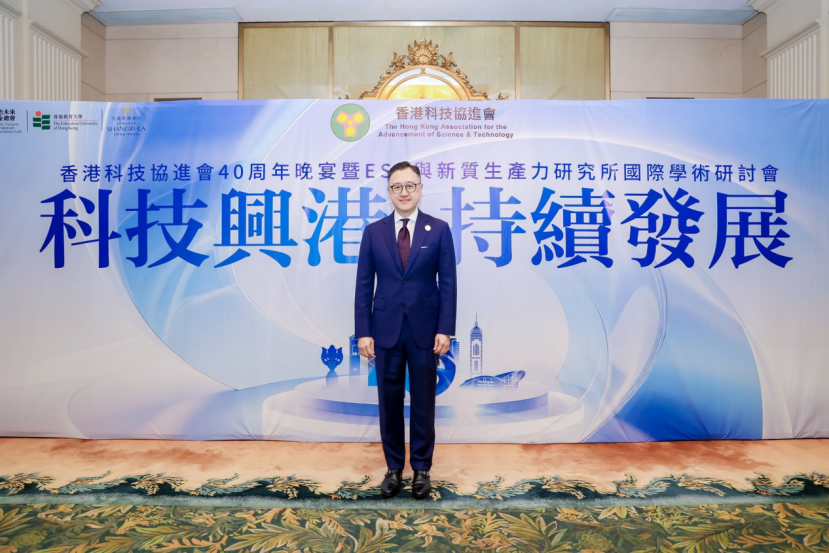
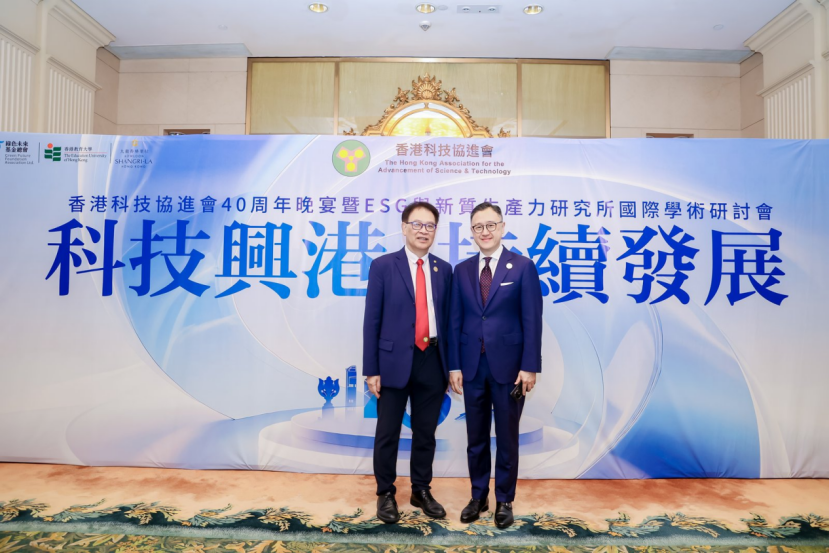
Recently, the 40th Anniversary Dinner of the Hong Kong Association for the Advancement of Science and Technology (HKAAST) and the International Academic Seminar on the Institute of ESG and New Quality Productive Forces were grandly held in Hong Kong. Joseph Mak, Dean of the Asia-Pacific ESG Strategy Research Institute (APESG) and Chairman of the International Association for Sustainable Economy (IASE) China Chapter , was invited to attend this grand event as a keynote speaker. With the theme “ESG Talent: The Sustainable Engine of New Quality Productive Forces”, he delivered a keynote speech that deeply analyzed the inherent synergistic logic between new quality productive forces and ESG, systematically elaborated on the core supporting role of talent in the green transformation of industries, and introduced the practical path and value of the IASE international certification system in cultivating interdisciplinary talents.
As a senior expert deeply engaged in the ESG field and corporate sustainable development, Joseph Mak pointed out in his speech that new quality productive forces, as a concrete manifestation of the modernization of productive forces, are characterized by high technology, high efficiency, and high quality. Their core essence lies in promoting the rapid development of green and low-carbon industries through revolutionary technological breakthroughs, innovative allocation of production factors, and in-depth transformation and upgrading of industries, as well as advancing the transformation of traditional industries towards high-end, intelligent, and green directions. Green development and sustainability are the core logic running through it.
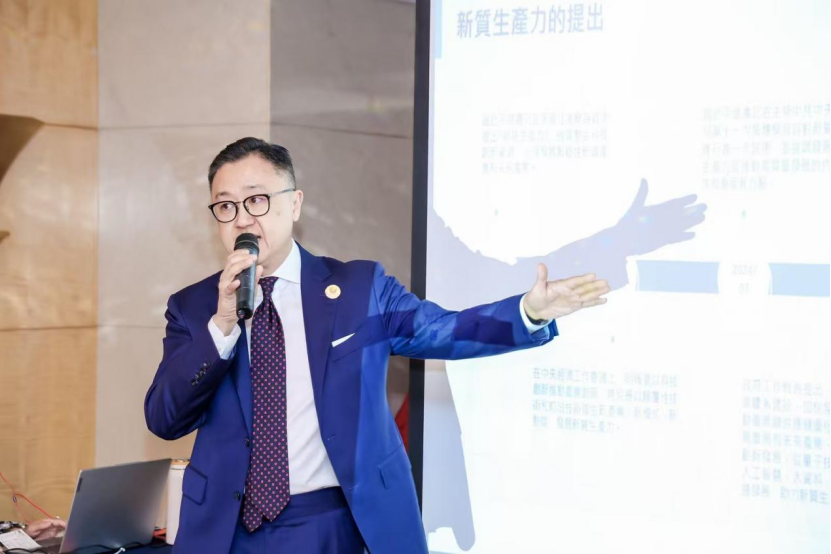
Combining industry trends and data for further interpretation, Joseph Mak stated that new quality productive forces have currently formed six core tracks: digital economy, new energy, high-end equipment, new energy vehicles, biotechnology, and low-altitude economy. Coupled with the trend of Chinese enterprises going global and the global upsurge in ESG investment, the market demand for sustainable development continues to rise. According to Wind data, among 5,363 A-share listed companies in 2023, 3,417 achieved overseas business income, totaling 8.51 trillion yuan, a year-on-year increase of 4.3%. The overseas income of BYD and CATL exceeded 100 billion yuan for the first time, and ESG compliance capabilities have become an important component of enterprises’ international competitiveness. As of March 31, 2025, the number of signatory institutions to the UN Principles for Responsible Investment (UN PRI) worldwide exceeded 5,200, with assets under management reaching 139.6 trillion US dollars; as of the end of the fourth quarter of 2024, China’s green loan balance reached 36.6 trillion yuan, and the issuance scale of green bonds reached 681.432 billion yuan. Driven by both policies and capital, ESG has become a mandatory task for enterprise development, and the talent gap has emerged as a core bottleneck restricting industry progress.
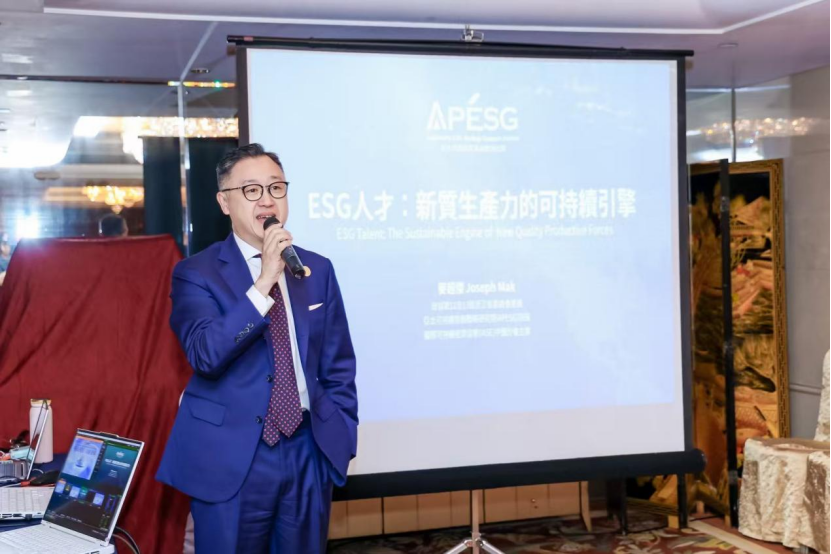
At the talent strategy level, Joseph Mak emphasized that the development of new quality productive forces is inseparable from the support of high-quality sustainable development talents. According to data from LinkedIn’s “Global Green Skills Report 2024”, the global green talent gap is continuing to expand: the gap ratio will reach 18.7% by 2030 and is expected to rise to 101.5% by 2050. At the domestic market level, the “2025 China ESG Talent Demand Research Report” points out that key industries such as finance, consumer retail (luxury goods/jewelry), new energy, petroleum and petrochemicals, and pharmaceutical and biotechnology have an especially urgent demand for professional ESG talents. Interdisciplinary ESG talents with a global perspective, local insights, technical literacy, and humanistic care are not only the core force for enterprises to implement sustainable development strategies but also the key link connecting international standards with local practices and promoting the implementation of new quality productive forces.
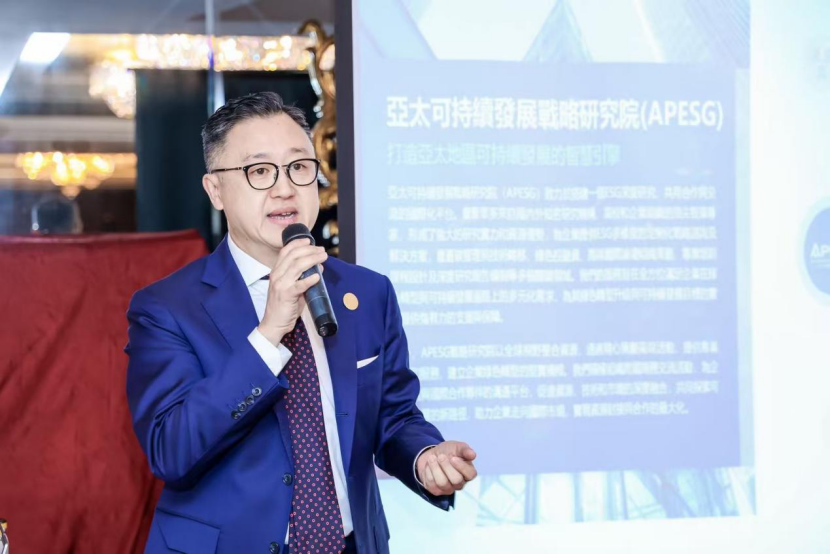
Addressing the industry pain points in ESG talent cultivation, Joseph Mak elaborated on the core advantages and practical value of the IASE international certification system. As an association focusing on the certification of ESG professionals, the IASE certification system has incorporated opinions from more than 40 important organizations and covers examinations in 39 countries. It has established a hierarchical certification system consisting of two core directions—International Sustainable Finance® (ISF®) and International Sustainable Business® (ISB®)—with three levels: Level I – Advisor, Level II – Specialist, and Level III – Expert, strictly adhering to the 4E standards of “Education, Exam, Ethics, and Experience”. The certification content comprehensively covers key areas such as ESG basic knowledge, financial analysis, climate risk management, and green technology. Recognized by numerous financial institutions and enterprises worldwide, this certification serves as a professional competency endorsement for ESG practitioners to enhance their competitiveness and expand career development space, providing a standardized and international solution for talent supply in the era of new quality productive forces.
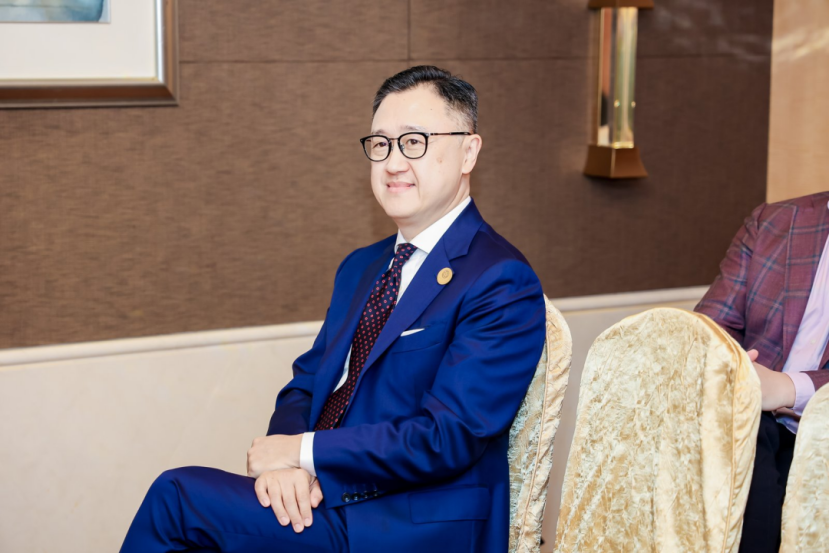
Attending the 40th Anniversary Dinner of HKAAST and the International Academic Seminar is an important practice of the APESG in building an international ESG exchange platform and promoting the in-depth integration of new quality productive forces and ESG. In the future, APESG will continue to cooperate with international institutions such as IASE, focusing on talent cultivation, standard alignment, and industrial empowerment, to provide professional support for enterprises’ green transformation, help build an ESG talent ecosystem with both international competitiveness and Chinese characteristics, and enable high-quality ESG talents to truly become the core engine for activating new quality productive forces and driving the green and sustainable development of industries.