
On December 13, 2025, the 15th International Roundtable Conference of Multinational Corporations’ Leaders was grandly convened in Changping, Beijing. Hosted by the China International Council for the Promotion of Multinational Corporations (CICPMC), this year’s conference, themed “An Open China and the World,” brought together hundreds of representatives from Fortune Global 500 companies, international organizations, and foreign institutions in China. They jointly explored opportunities for transnational cooperation during China’s modernization drive in the “15th Five-Year Plan” period, injecting new momentum into building an open world economy.
As a significant academic and practical achievement of the conference, Selected ESG Cases of Multinational Companies in China in 2025 (hereinafter referred to as the “Case Collection”) was officially released, providing benchmark models and practical pathways for multinational companies in China to implement sustainable development and zero-carbon transformation. Mr. Joseph Mak, Dean of the Asia-Pacific ESG Strategy Research Institute (APESG) and Chairman of the China Chapter of the International Association for Sustainable Economy (IASE), was invited to attend and deliver a keynote speech.
Focusing on Openness and High-Quality Development, Exploring New Pathways for Transnational Cooperation
Aligned with the era of launching the “15th Five-Year Plan” and the transformation of global economic governance, this conference featured a main forum on “Expanding Openness and High-Quality International Cooperation,” alongside four parallel sessions: New Energy and Sustainable Development, Advanced Manufacturing and Artificial Intelligence, Healthcare Reform and Life Sciences, and Fintech Empowering Multinational Enterprises.
Participants engaged in in-depth discussions on core topics such as the “15th Five-Year Plan” and China’s sustainable economic development, as well as the impact of geopolitics on global supply chain investments, establishing a high-level dialogue platform for multinational enterprises to integrate into China’s new development paradigm and deepen international industrial collaboration.
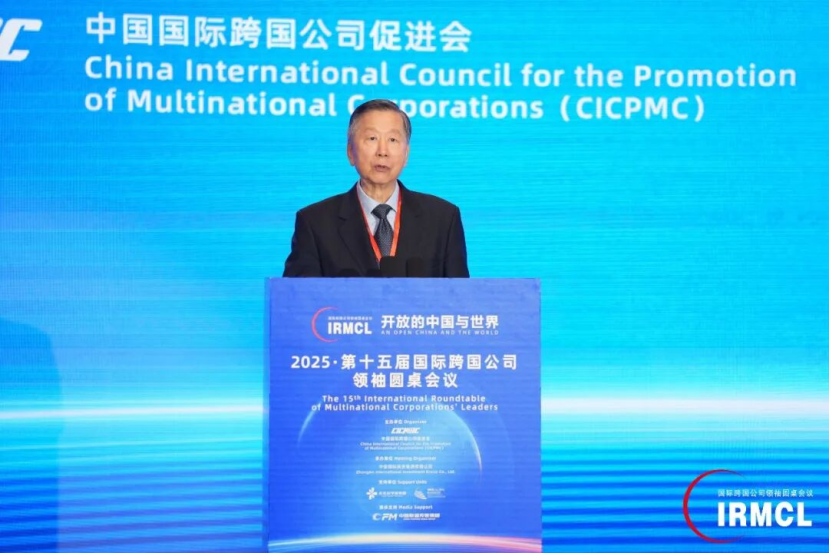
Mr. Shang Fulin, Chairman of the Economic Affairs Committee of the 13th National Committee of the Chinese People’s Political Consultative Conference and Special Invited President of the China International Council for the Promotion of Multinational Corporations, presided over the opening ceremony.
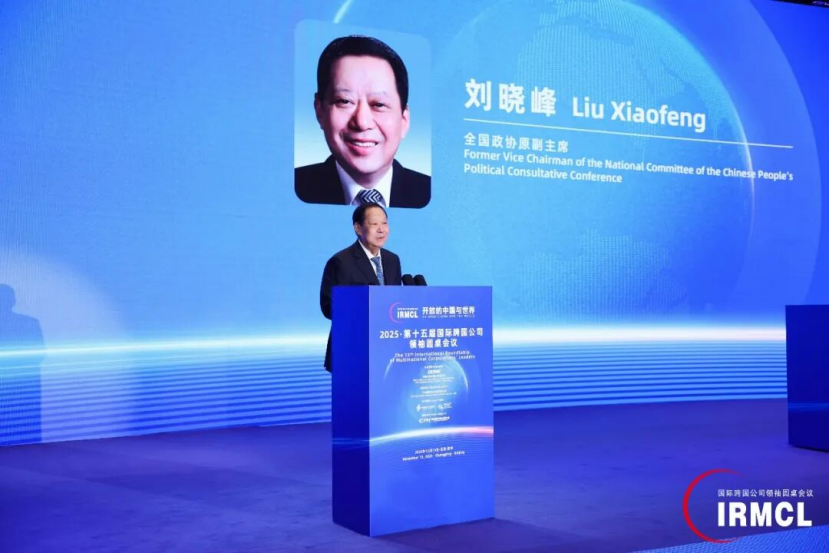
Mr. Liu Xiaofeng, Vice Chairman of the 12th National Committee of the Chinese People’s Political Consultative Conference, attended and delivered a speech at the opening ceremony.
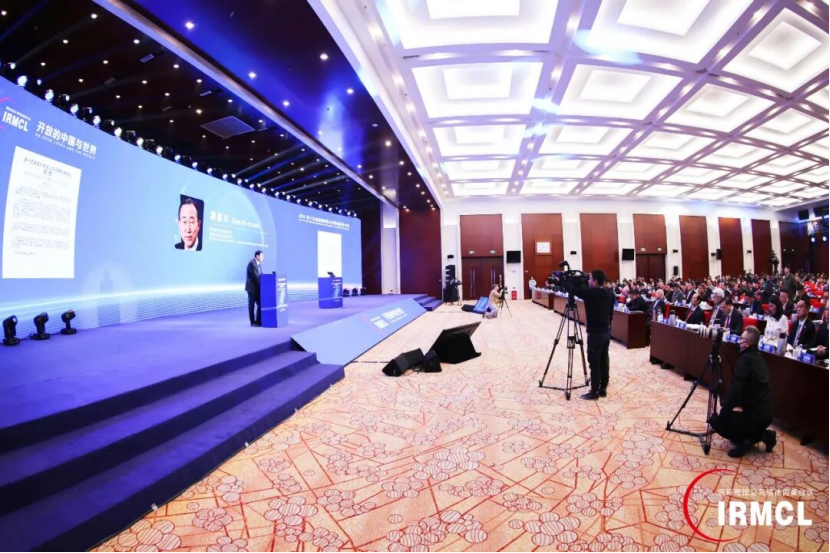
Mr. Ban Ki-moon, the eighth Secretary-General of the United Nations and Chairman of the Boao Forum for Asia, sent a congratulatory letter to the conference.
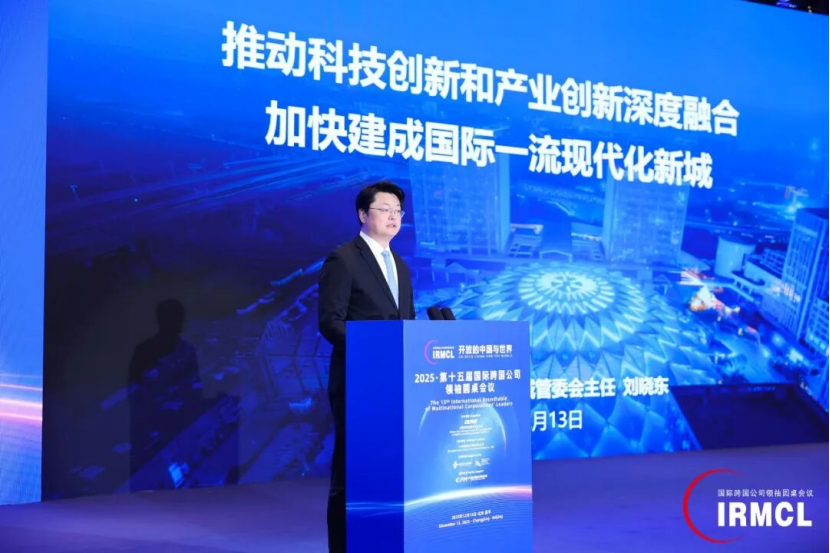
Mr. Liu Xiaodong, District Governor of Changping District, Beijing Municipality and Director of the Future Science City Administrative Committee, introduced the development of industrial clusters and high-quality enterprises in Changping.
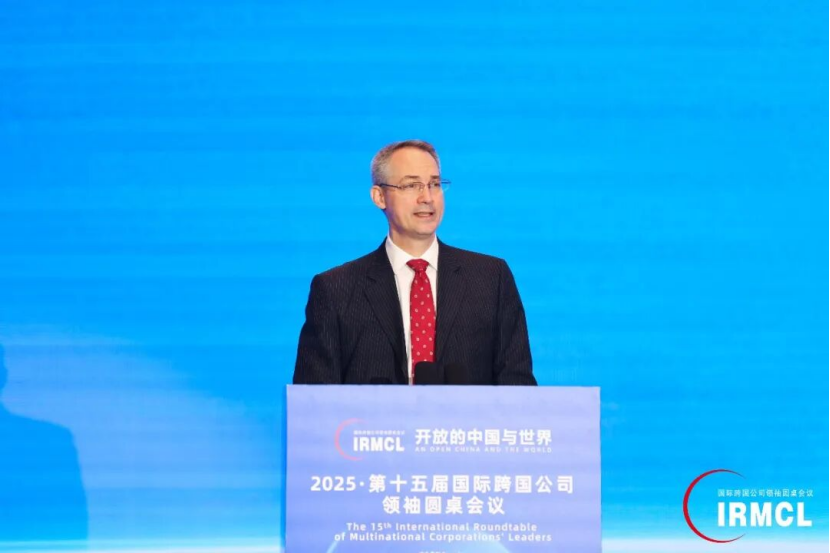
Mr. Michael Hart, President of the American Chamber of Commerce in China, emphasized the importance of “openness” as the foundation for long-term economic development.
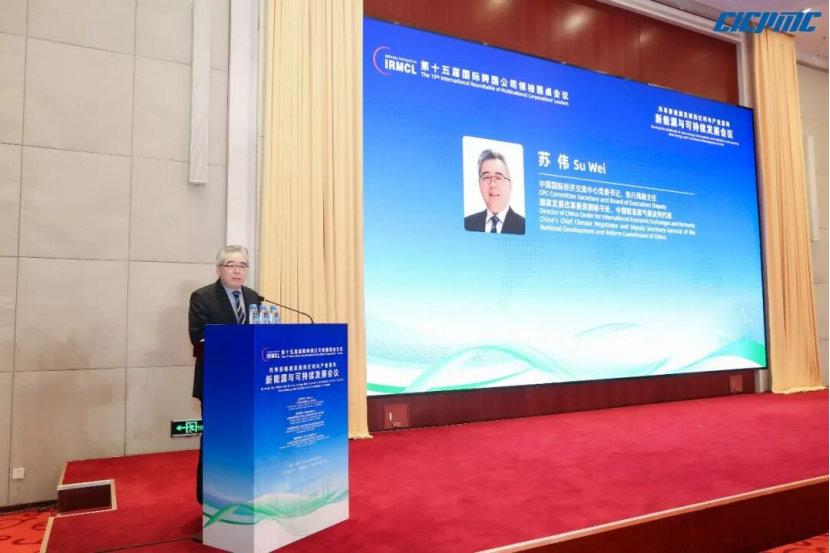
Mr. Su Wei, Secretary of the Party Committee of the China Center for International Economic Exchanges, former Deputy Secretary-General of the National Development and Reform Commission, and member of the Advisory Committee of the China Chapter of the International Association for Sustainable Economy (IASE), delivered a keynote speech systematically elaborating on China’s actions and goals in addressing climate change.
Joseph Mak Delivers Keynote Speech, Outlining Blueprint for Building Zero-Carbon Partnerships
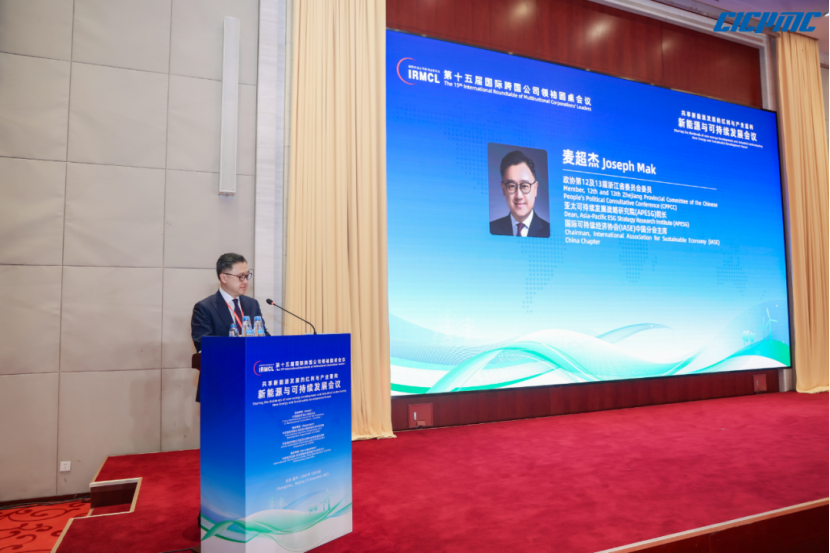
Mr. Joseph Mak, Dean of the APESG and Chairman of the IASE China Chapter, was invited to attend and deliver a keynote speech at the “New Energy and Sustainable Development Parallel Session.” Starting from the current state of the global climate crisis and the urgency of low-carbon transition, he provided solutions for global zero-carbon cooperation.
Joseph Mak pointed out that, according to data from the World Meteorological Organization, the global average temperature in 2024 was 1.55°C higher than pre-industrial levels, surpassing the 1.5°C temperature control warning threshold of the Paris Agreement for the first time. Meanwhile, global greenhouse gas emissions in 2024 increased by 2.3% year-on-year to 57.7 billion tons of CO₂ equivalent. Climate governance has now entered a critical stage where action is urgently needed. Against this backdrop, zero-carbon efforts by individual countries or enterprises are insufficient to address global challenges, making the establishment of zero-carbon partnerships an inevitable choice.
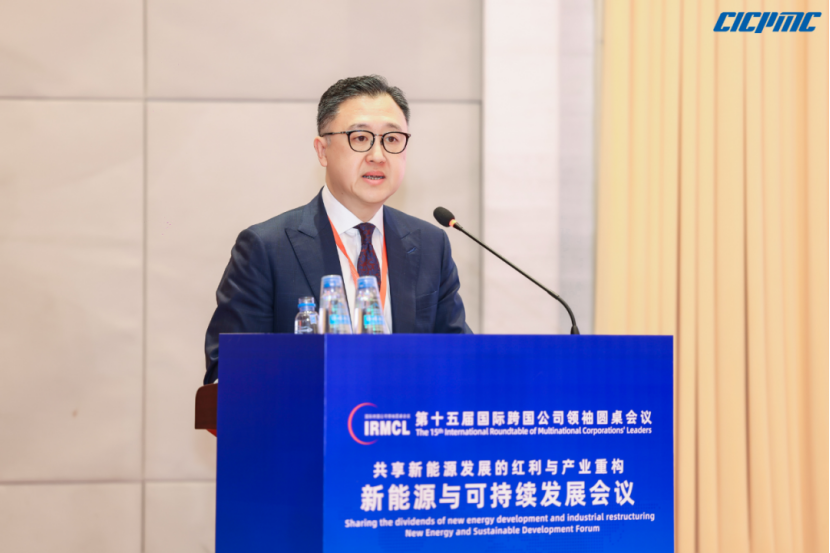
At the international cooperation level, Joseph Mak pointed out that transnational collaboration and technology sharing are essential pathways to drive the global low-carbon transition. He noted that China possesses significant innovation and production advantages in green technology fields such as photovoltaics, new energy vehicles, and large-scale energy storage, while Europe has deep accumulated expertise in green finance and policy implementation. The complementary strengths of the two can provide powerful synergy for the global low-carbon transition.
In the realm of knowledge sharing and talent cultivation, Joseph Mak cited data from LinkedIn’s 2024 Global Green Skills Report, noting that the global demand for green talent grew by 11.6% from 2023 to 2024, twice the rate of supply growth. It is projected that by 2050, the supply-demand gap for green talent will widen to 101.5%. He called for the establishment of a comprehensive green talent cultivation system that “balances technology and humanities, integrating global vision with local insights.” This involves strengthening training in core skills such as sustainability reporting and environmental impact assessment, thereby providing talent support for the zero-carbon transition.
Authoritative ESG Case Collection Released, Setting Sustainability Benchmarks for Multinational Companies in China
At present, the ESG practices of multinational enterprises globally have entered a phase of standardization and systematization. Against this backdrop, the CICPMC, APESG, and the IASE China Chapter have jointly organized, compiled, and released the Selected ESG Cases of Multinational Companies in China in 2025. The compilation of this case collection aims to systematically review the ESG achievements of multinational enterprises in China, establish a platform for industry experience exchange, promote the transformation of ESG principles from compliance requirements into core corporate competitiveness, and provide international benchmarks for local Chinese enterprises in implementing sustainable development.
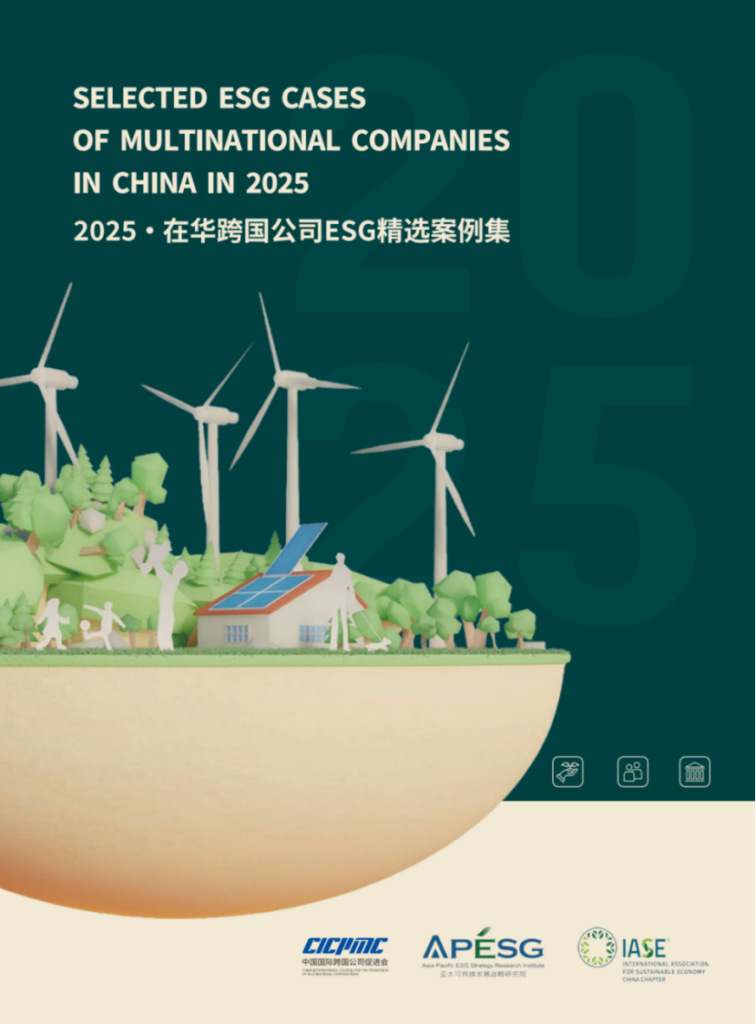
In terms of case collection, the compilation team employed a three-dimensional screening mechanism consisting of “self-submission by enterprises, recommendations from industry associations, and targeted research by experts.” Over the course of one month, the process covered more than 10 key sectors, including new energy, advanced manufacturing, pharmaceuticals, and healthcare. Ultimately, a diverse range of benchmark cases were selected, encompassing foreign-invested enterprises operating in China, as well as multinational companies listed on the A-share and Hong Kong stock markets.
During the screening process, the expert panel focused on the core criteria of “innovativeness, effectiveness, and replicability.” They not only assessed the comprehensive performance of enterprises across environmental, social, and governance dimensions but also paid special attention to their distinctive practices in areas such as collaborative carbon reduction within supply chains, community public welfare, and technological innovation.
The case collection’s content framework is divided into four main sections:
1.Background and Core Significance of ESG – This section systematically outlines the evolution of ESG concepts and their global development context.
2.ESG Practices of Multinational Companies in China – This part features the practical approaches of five foreign-invested enterprises, including Bayer China, Reckitt Benckiser China, and Schneider Electric China, showcasing initiatives such as green factory transformation, building zero-carbon supply chains, reducing emissions across product life cycles, women’s health public welfare programs, and ecological restoration.
3.ESG Practices of A-Share Listed Multinational Enterprises – This section focuses on the green aviation and carbon market compliance practices of China Eastern Airlines, as well as the clean energy transition and overseas social responsibility initiatives of Huaneng Power International.
4.ESG Practices of Hong Kong-Listed Multinational Enterprises – This part highlights the achievements of Hong Kong and China Gas in hydrogen energy and green methanol development, as well as the carbon reduction outcomes enabled by China Mobile’s digital intelligence solutions.
Through an in-depth analysis of the cases, the report summarizes three common characteristics of ESG practices among multinational companies in China:
First, localization adaptation has become a core strategy—enterprises widely integrate global ESG standards with China’s national strategies such as the “dual-carbon” goals and rural revitalization.
Second, technology-driven features are prominent—digital tools are extensively applied in scenarios such as carbon management, resource utilization, and supply chain traceability.
Third, value chain collaboration has emerged as a mainstream model—leading enterprises drive upstream and downstream small and medium-sized enterprises to jointly build a sustainable industrial ecosystem.
Meanwhile, the case collection provides an in-depth analysis of the overall trends and governance logic in the ESG practices of global multinational enterprises.At the governance level, ESG strategies of multinational enterprises are deeply integrated into their core governance systems, with governance structures gradually becoming standardized. The prevalent model is “board-driven + specialized committee execution,” and quantitative targets such as emission reduction and the proportion of green electricity are incorporated into executive performance evaluations.In terms of environmental dimensions, “whole-value-chain carbon reduction” is the core practice direction, covering enterprises’ own operations, supply chain collaboration, and technological innovation.Technological innovation serves as the core support for ESG practices, particularly reflected in digital management, the application of green technologies, and industrial empowerment.At the social level, the focus is on employee care, community responsibility, and the collaborative development of industry ecosystems, emphasizing the concepts of “people-oriented” and multi-stakeholder win-win outcomes.
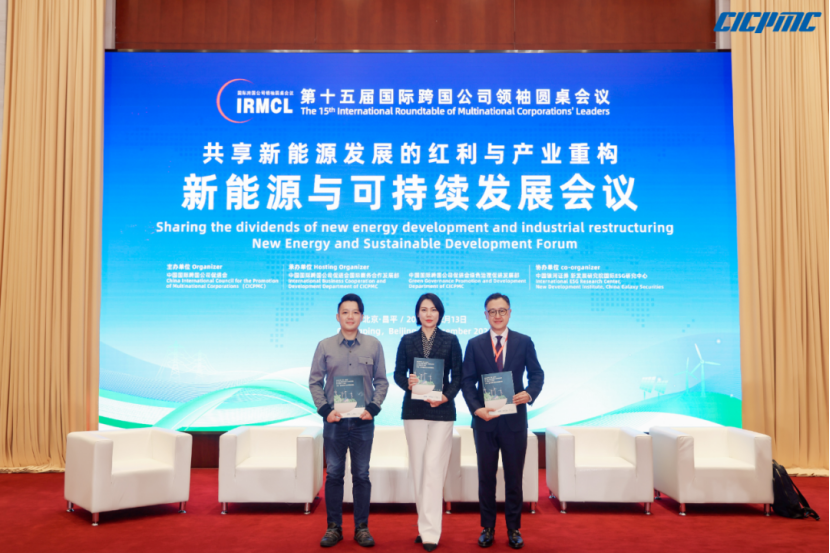
Joseph Mak stated that the case collection represents a significant collaborative achievement in ESG research by the three parties. It serves not only as a systematic review and summary of the sustainable practices of multinational enterprises in China but also as a concrete action to advance the implementation of ESG principles across the industry and foster the exchange of sustainable development experiences. In the future, APESG will continue to leverage its role as an expert think tank, building high-level platforms for international cooperation and knowledge sharing to support more enterprises in achieving green transformation and high-quality development.
Preparations Underway for the Establishment of a Sustainable Development and Zero-Carbon Partnership Working Committee to Build a Platform for Cross-Border Green Collaboration
At the “New Energy and Sustainable Development” parallel session of the conference, the China International Council for the Promotion of Multinational Corporations not only gathered a group of domestic and international enterprises and think tanks to share information, communicate, and explore solutions but also leveraged its platform advantages. In collaboration with over thirty multinational corporations with leading expertise in green technology, zero-carbon practices, and ESG, the council held a preparatory ceremony for the establishment of the “The Working Committee on Sustainable Development and Zero-Carbon Partnership of CICPMC .”It is understood that the committee will rely on the international, multilateral cooperation platform established by the CICPMC to build an open, shared, and collaborative industry dialogue and cooperation mechanism. It will serve as a bridge and link between the government, enterprises, and think tanks, focusing on key issues such as the “dual-carbon” strategy, green transformation, and sustainable development during the “15th Five-Year Plan” period. The committee will promote the interactive integration of industry, technology, and capital and actively facilitate technical exchanges and business cooperation between domestic and international enterprises in the green and low-carbon fields.
The preparatory ceremony was presided over by Ms. Luo Xiaoqi, Executive Secretary-General of the CICPMC. The launch of the committee’s preparatory work was jointly initiated by Mr. Ge Wei, Special Invited Vice President of the Council; Mr. Huang Xiaojun, Senior Vice President and Chief Representative of China at Veolia; Mr. Xu Yang, President of Albemarle China; Ms. Liu Lijia, Global Partnership Director of LafargeHolcim Group; Mr. Joseph Mak, Dean of APESG and Chairman of the IASE China Chapter; Mr. Wu Junyi, Vice President of Michelin Greater China and Mongolia, and Director of Strategy and Public Affairs; and Ms. Zhang Danyang, Vice President of Government Affairs and Market at Knorr-Bremse Rail Systems China.
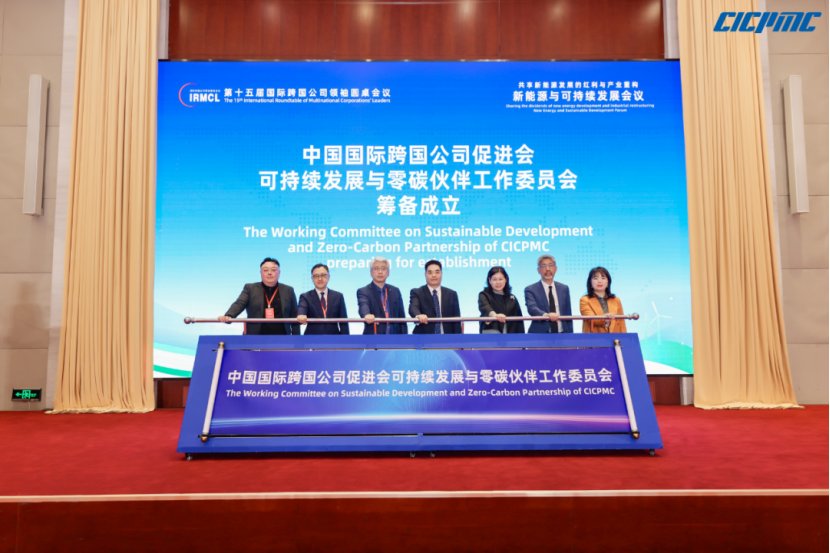
With profound expertise and professional influence in the field of sustainable development, Dean Joseph Mak has been invited to serve as Vice Chairman of the committee. He stated that he will fully leverage the professional strengths of the APESG Strategic Research Institute in sustainable development and green low-carbon initiatives. By drawing on the institute’s extensive network of top domestic and international think tank experts, he aims to integrate diverse strengths from a global perspective, providing robust support for enterprises in their green transformation and upgrading, technological innovation breakthroughs, and the implementation of sustainable development goals.
The convening of this conference and the release of the ESG case collection have established a critical bridge for multinational enterprises to connect with the Chinese market and practice sustainable development. In the deepening integration of an open China with the world, the APESG Strategic Research Institute will continue to contribute through professional research and practical empowerment, promoting the solid implementation of zero-carbon partnerships and contributing wisdom and strength to global sustainable development.