
On 28 March 2026, the Beijing Session of the 2026 Columbia University Global Sustainability Summit was grandly held at Columbia Global Centers Beijing. Centered on the theme “Reimagining Future Paradigms: Forging New Pathways for Global Sustainable Development through Cutting-edge Technology, Capital, Women and Youth”, the summit brought together hundreds of distinguished senior leaders and young pioneers from government authorities, international organizations, academic institutions, enterprises and non-profit sectors. Participants engaged in in-depth cross-sector dialogues on core global sustainability topics, jointly exploring integrated development models that combine technological innovation, capital empowerment and social governance.
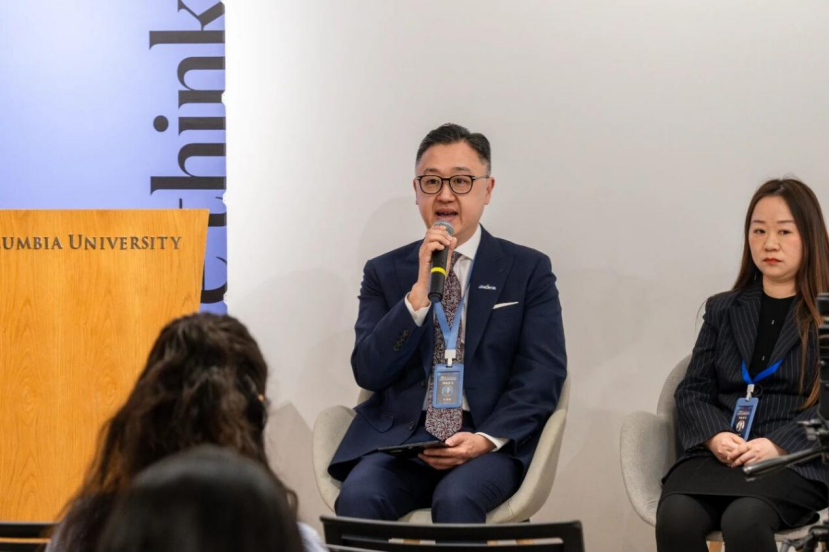
Joseph Mak, Dean of Asia-Pacific ESG Strategy Research Institute (APESG), was invited to the summit and served as a key speaker at the special forum on sustainable development. He exchanged insights with experts and scholars from top domestic think tanks, financial institutions and international universities, delivering forward-looking professional perspectives covering regional strategies, Asia-Pacific collaboration and youth practical engagement.
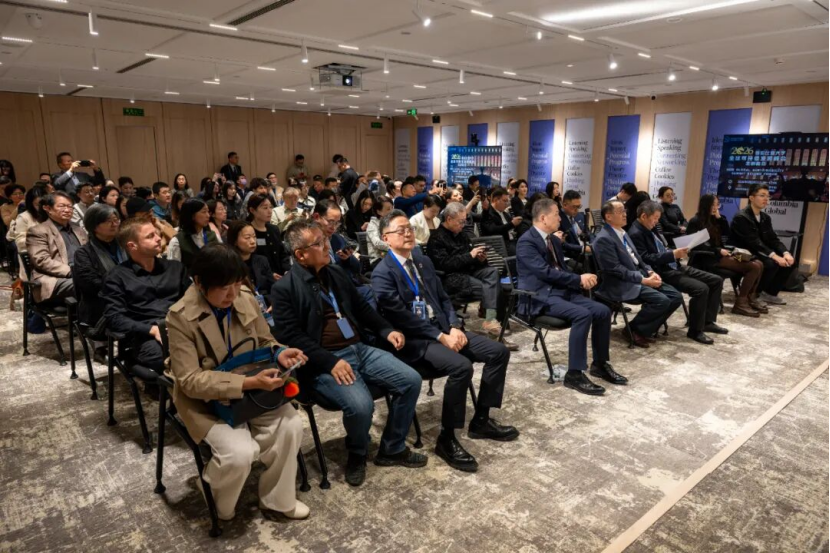
Summit Highlights: Pool Global Wisdom to Chart a Sustainable Future
The summit serves as a bridge connecting cutting-edge international academic research with local Chinese real-world practices, with a focus on trending topics including sustainability, artificial intelligence and sustainable investment. It systematically examined interactive mechanisms and collaborative pathways linking technological innovation, capital allocation and social governance.
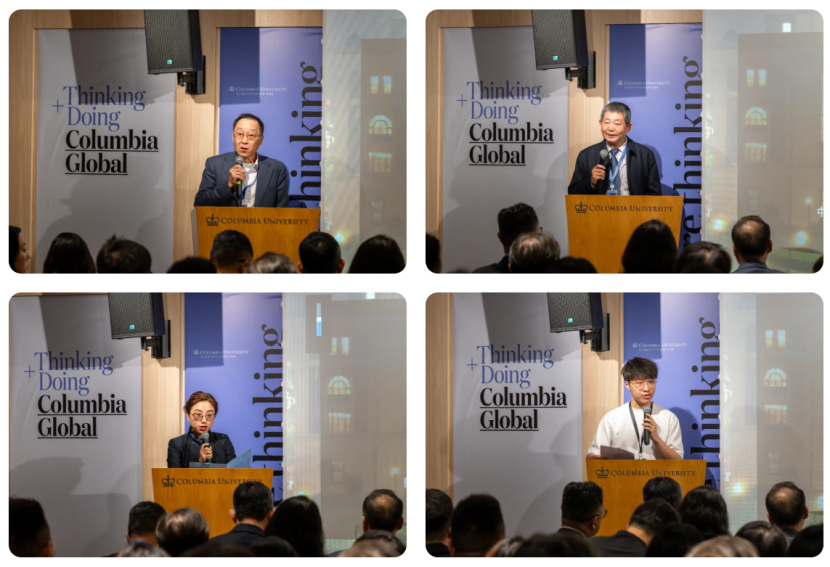
During the opening speeches, Huang Jianzhong, Chairman of China Electronic Energy Saving Technology Association (CEESTA); Ye Herui, Level 1 Inspector of the Ministry of Ecology and Environment; Shauna, Director of Columbia Global Centers Beijing; and Wu Zequn, Head of the Summit Organizing Committee elaborated on the significance of advancing sustainable development from the dimensions of policy guidance, technological innovation and talent cultivation.
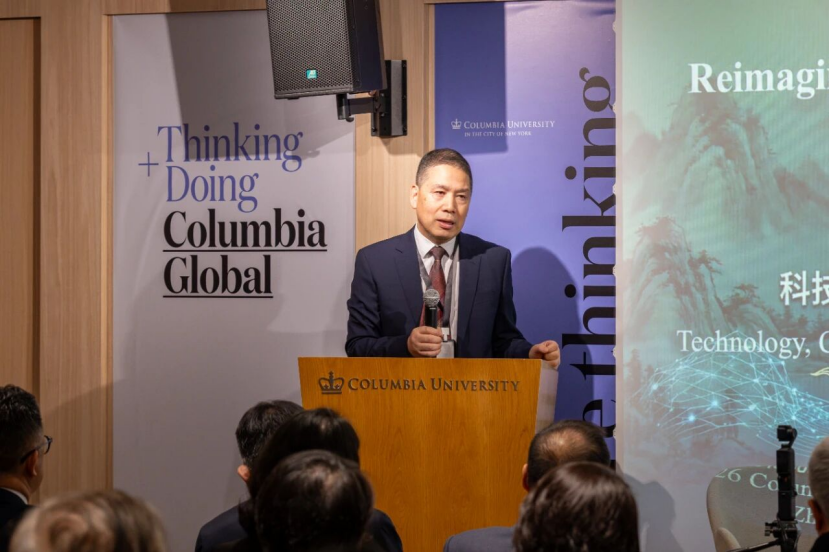
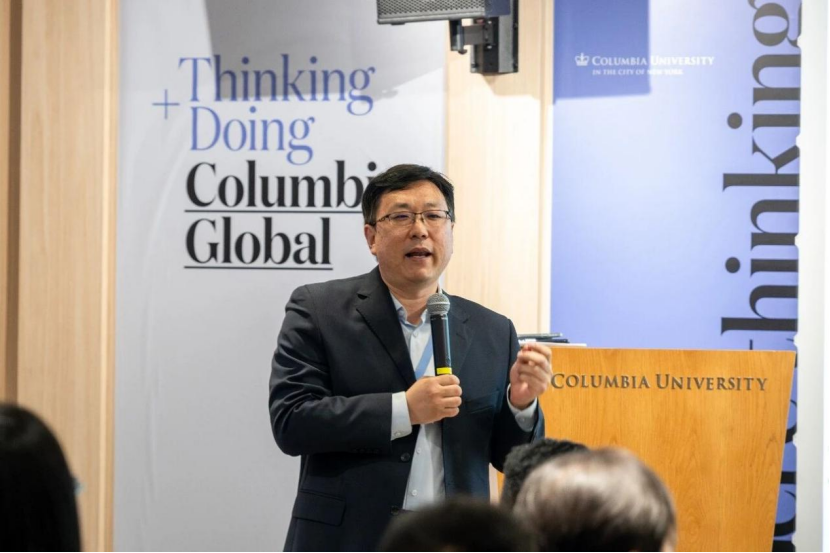
In the keynote session, distinguished experts including Zhou Jinfeng, President of World Academy of Sustainable Development, and Professor Li Zeguang, Vice Dean of the School of Finance, Nankai University shared profound views on “reimagining future paradigms” and “finance, investment and sustainable development”, stressing that technological innovation and institutional coordination act as core driving forces for sustainable development.
Focus on Regional Sustainable Development: Analyze New Regional Paradigms and China’s Leadership
At the Special Forum on Sustainable Development, Joseph Mak delivered a systematic review and forward-looking outlook on sustainable finance and ESG system construction from policy, market and regional cooperation perspectives. He emphasized that regional entities carry irreplaceable unique value in advancing sustainability, and elaborated on China’s leading role in Asia-Pacific sustainable collaboration.
(1) Regional Development: Capillaries of National Strategies, Testbeds for Innovative Practices
Joseph Mak pointed out that regions serve as a critical link connecting national top-level strategies with local industries and people’s livelihoods. Macro carbon peaking and carbon neutrality goals as well as sustainability visions must be implemented in differentiated ways tailored to local resource endowments, industrial structures and economic development stages. He highlighted two core tools for local governments to deliver dual-carbon and ESG targets: market-oriented carbon asset management mechanisms, and zero-carbon industrial ecosystems fueled by green finance. Optimized carbon accounting and carbon trading systems will drive corporate technological upgrading, while green investment and financing channels will empower core green tech enterprises to achieve balanced commercial and social returns.
(2) Asia-Pacific Collaboration: China’s Shift from Product Export to Tech Empowerment, Capital Integration and Standard Leadership
Against the opportunities and challenges of green transition and industrial chain coordination across the Asia-Pacific, Joseph Mak stressed that China should fully upgrade its model of participating in and leading regional sustainable cooperation, shifting from simple product export to integrated tech empowerment, cross-border capital connectivity and international standard leadership. He proposed leveraging the Belt and Road Initiative to deepen cross-border collaboration on green technologies and industrial chains, advance mutual recognition of ESG standards and green financial connectivity, and export mature ESG governance experience and green innovation technologies to share the dividends of green development with all Asia-Pacific economies.
(3) Youth Engagement: From Visible Influence to Systemic Transformation
In his message to young practitioners, Joseph Mak noted that elevating individual visible impact to systemic transformation hinges on two pillars: solid professional competence and effective utilization of cross-sector bridge platforms. He encouraged young people to translate enthusiasm into quantifiable, assessable professional capabilities, engage actively in international and regional cooperation networks, and evolve from participants to co-designers of global sustainability rules to drive systemic reform.
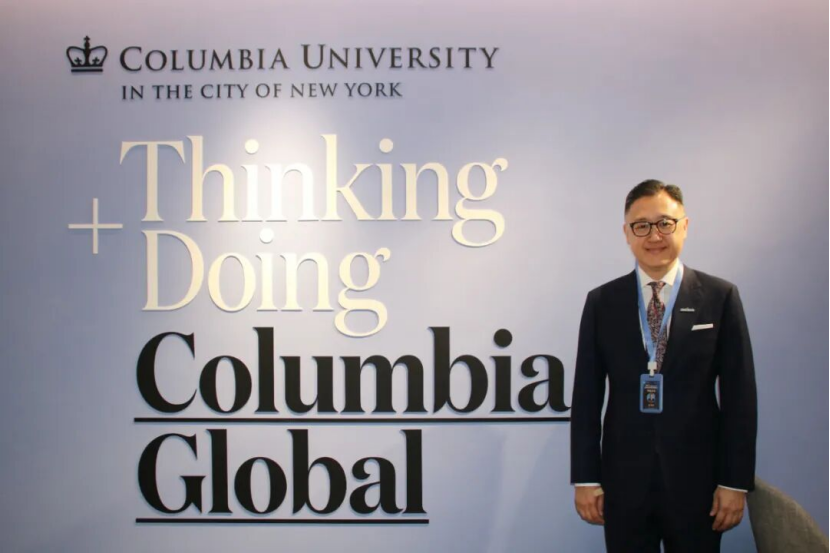
The successful convening of the Columbia University Global Sustainability Summit has not only built an in-depth exchange platform for global sustainability agendas, but also consolidated cross-stakeholder consensus and boosted cross-industry collaboration. Upholding professional rigor, Asia-Pacific ESG Strategy Research Institute (APESG) will continue to draw on its strengths in ESG, sustainable finance and cross-border resource matching to engage deeply in global sustainable development. Through green finance and specialized consultancy, APESG will empower enterprises’ cross-border expansion. Partnering with stakeholders from all sectors, it will advance the popularization and implementation of sustainability concepts, contributing Chinese wisdom and Asia-Pacific strength to building a greener, more prosperous and equitable global future.